


 Deutsch
 English
 Español
 Français
 Nederlands
 Português


 Share
Share




China's 2026 export controls on rare earths and critical minerals have triggered a seismic shift in global supply chains, with prices spiking sixfold outside China and European licensing approvals plummeting below 25%. As Beijing controls 90% of global rare earth processing, Western governments face a narrowing 12- to 18-month window to build alternatives for defense, electric vehicle (EV), and renewable energy supply chains. This article analyzes the strategic weaponization of mineral leverage, the geopolitical ripple effects, and whether a hybrid model of managed dependence can sustain industrial output while independent supply chains remain decades away.
Context: China's Dominance in Critical Minerals
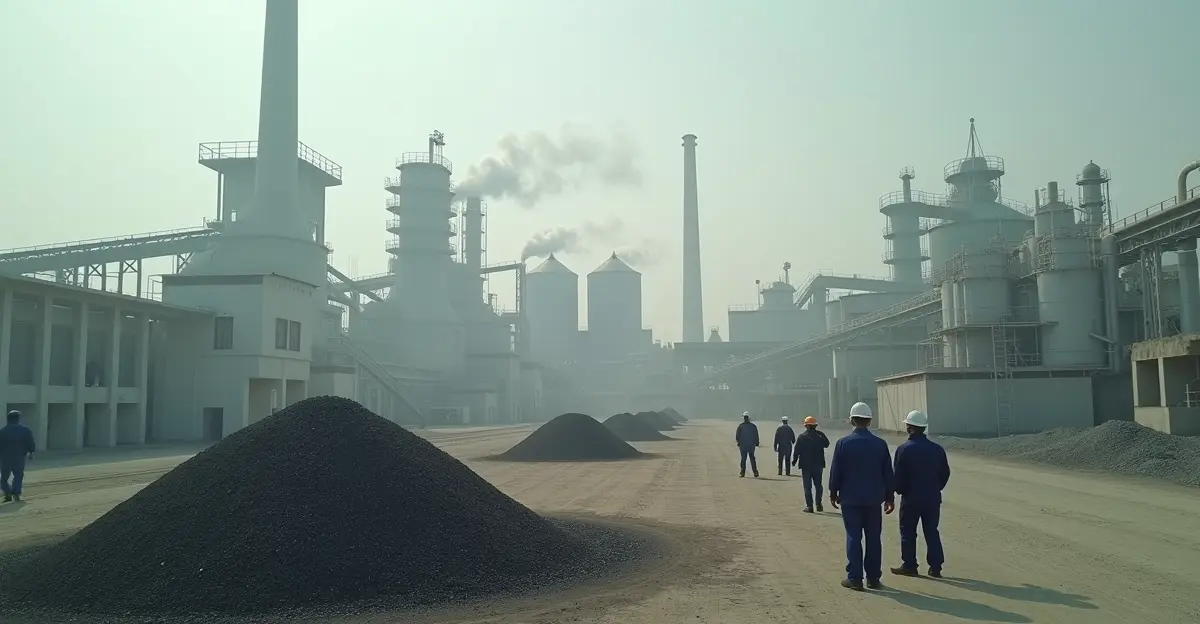
China's stranglehold on critical minerals is the result of decades of strategic investment. According to a 2026 multi-institutional analysis, Beijing controls 90% of global rare earth processing, 80% of tungsten refining, and 60% of antimony production. The rare earth supply chain is heavily concentrated in China, with the country also dominating downstream processing of lithium, cobalt, and graphite essential for EV batteries and renewable energy technologies.
The 2025-2026 export controls represent an escalation of a long-standing strategy. China first imposed export quotas on rare earths in 2010, triggering a WTO dispute. However, the current measures are more sophisticated: temporary, reversible restrictions that maintain pricing power and extract strategic concessions without provoking a full-scale trade war. The European Parliamentary Research Service (EPRS) noted in a 2025 briefing that China's export controls on rare earth elements (REEs) have tightened significantly, impacting electronics, defense systems, and green energy technologies.
Price Spikes and Licensing Rejections
The immediate impact has been dramatic. Neodymium-praseodymium oxide, a key magnet material, surged from $80/kg to over $480/kg by early 2026 — a sixfold increase. Dysprosium oxide, critical for permanent magnets in EVs and wind turbines, rose 212% year-on-year. European firms now face licensing approval rates below 25%, effectively cutting off supply for many manufacturers. Over 80% of European companies depend on Chinese supply chains for minerals essential to defense, EVs, and renewable energy, according to the same analysis.
For the defense sector, the stakes are existential. A single F-35 fighter jet requires over 400 kg of rare earth materials. The defense supply chain vulnerability extends to missile guidance systems, night vision goggles, and radar technologies. In the EV industry, each non-Chinese vehicle now costs approximately $500 more due to price spikes in magnet materials, squeezing margins for automakers already facing intense competition.
Geopolitical Ripple Effects
The export controls have triggered a cascade of geopolitical responses. The United States launched FORGE (Forum on Resource Geostrategic Engagement), a 54-country alliance backed by over $30 billion, and Project Vault, a $12 billion Strategic Critical Minerals Reserve. The Australia-U.S. framework commits at least $1 billion each from both nations. The EU's ReSourceEU Action Plan allocates €3 billion for a Critical Raw Materials Centre, while the EU's Critical Raw Materials Act sets targets for domestic processing capacity.
Gulf states have also entered the fray. Saudi Arabia and the UAE are deploying over $100 billion in mineral investments, targeting African and Australian mining assets. The Gulf states critical minerals strategy aims to position them as alternative processing hubs, though analysts caution that building refineries and supply chains will take years.
China's 15th Five-Year Plan (2026–2030) prioritizes expanded domestic exploration and tighter supply chain integration, backed by $57 billion in cumulative investment since 2000. Beijing is also leveraging its position to negotiate trade deals and diplomatic recognition, particularly with developing nations rich in mineral resources.
Can the West Build Alternatives?
Rebuilding independent supply chains is a monumental challenge. Analysts estimate 5-7 years for meaningful scaling of processing capacity and 20-30 years for full independence from Chinese supply chains. The Western critical minerals strategy faces multiple hurdles: high capital costs, environmental permitting delays, and a shortage of skilled labor for rare earth refining.
The US has partnered with Australia ($3.6 billion combined financing) and signed a strategic agreement with the Democratic Republic of Congo for cobalt and lithium access. However, Western projects won't reach sufficient capacity until at least 2028, creating a critical gap. The narrowing 12-18 month window for decisive action means that without immediate investment, industries could face severe disruptions.
Expert Perspectives
"China is weaponizing control, not scarcity," says a lead author of the 2026 multi-institutional analysis. "The restrictions are temporary and reversible, designed to maintain pricing power and extract concessions while discouraging Western alternative investment."
A RUSI (Royal United Services Institute) report from June 2026 emphasizes the defense and security perspective, warning that China's dominance creates a strategic vulnerability for NATO allies. The report recommends accelerated stockpiling and diversified sourcing agreements.
European industry leaders express frustration. "We are caught between price spikes and supply uncertainty," a European automotive executive told Reuters. "Each EV we produce costs $500 more due to magnet material prices. We cannot pass all costs to consumers."
FAQ
What are China's 2026 export controls on critical minerals?
China's 2026 export controls are a set of temporary, reversible restrictions on rare earths, tungsten, antimony, and other critical minerals. They include reduced licensing approvals (below 25% for European firms) and export quotas, effectively limiting supply to foreign buyers while maintaining domestic availability.
Why does China control 90% of rare earth processing?
China invested heavily in rare earth processing infrastructure since the 1980s, leveraging low labor costs, lax environmental regulations, and government subsidies. By 2026, it operates the world's most advanced and cost-effective refining facilities, giving it a near-monopoly on processed rare earths.
How have prices been affected?
Prices for key rare earth oxides have spiked up to sixfold outside China. Neodymium-praseodymium oxide rose from $80/kg to over $480/kg, while dysprosium oxide increased 212% year-on-year. Chinese domestic prices remain lower due to subsidies, widening the price differential.
What is the West doing in response?
The US launched FORGE (54-country alliance, $30+ billion) and Project Vault ($12 billion reserve). The EU enacted the Critical Raw Materials Act and allocated €3 billion for a Critical Raw Materials Centre. The US also partnered with Australia and the DRC for mineral access. However, alternative supply chains are not expected to reach scale until 2028 at the earliest.
How long will it take to build independent supply chains?
Analysts estimate 5-7 years for meaningful processing capacity and 20-30 years for full independence from Chinese supply chains. The current 12-18 month window is critical for initial investments and stockpiling decisions.
Conclusion: The Hybrid Path Forward
The analysis outlines three strategic paths: managed dependence (accepting Chinese dominance while stockpiling), costly independence (full decoupling), or a hybrid model combining stockpiles, recycling, and diversified sourcing. The hybrid model appears most feasible, balancing resilience with realism. However, the narrowing 12-18 month window demands immediate action. Without decisive Western investment, China's mineral leverage will only grow, reshaping global supply chains for decades to come.
Follow Discussion